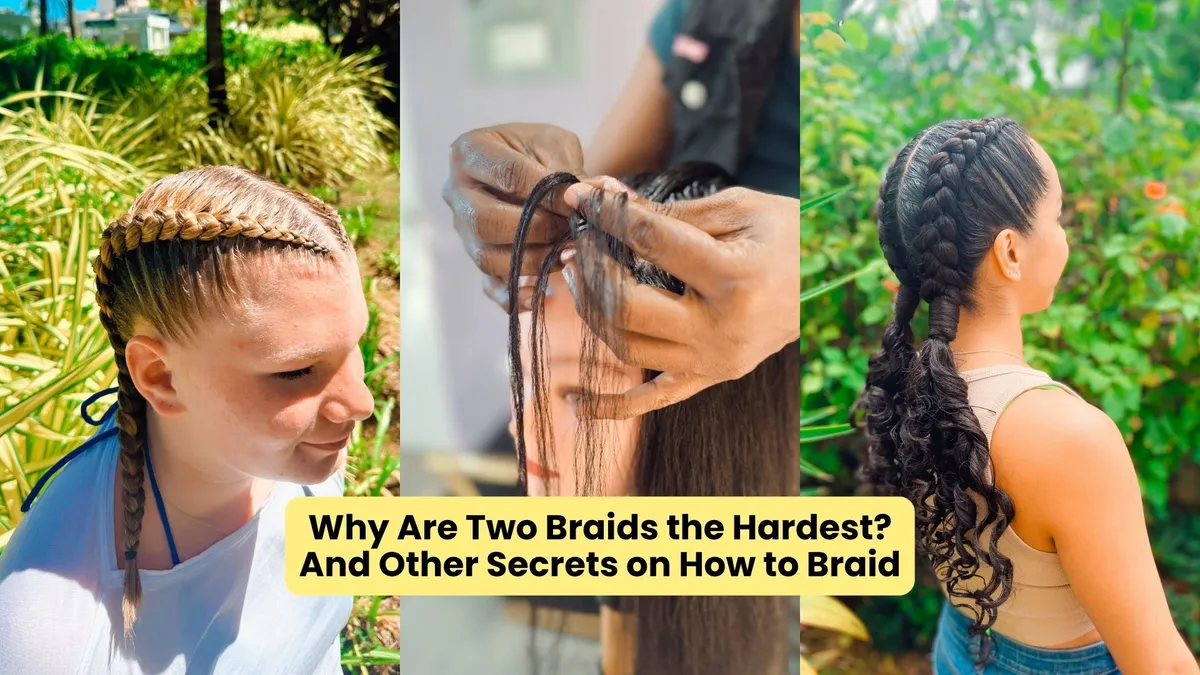
Why Are Two Braids the Hardest? And Other Secrets on How to Braid
When I share with my students the many braided hairstyles we create at Sunny Braids, many are impressed by the variety and think it will take them a lot of time to learn them all. Actually, when you learn with the right braiding technique, you acquire confidence and clarity, and soon you realize the sky is the limit! Within you, there’s the unlimited potential to develop your creativity.
Before you start learning how to braid with confidence, let’s break some misconceptions! In this article, I’ll explain why creating two braids is a real test and can be harder than you think. In the meantime, I’ll share with you some secrets that set braiding enthusiasts apart from true braiding pros.
Two Braids Aren’t Easy When Learning How to Braid
Many first-time learners come eager to start creating the easiest hairstyles, telling themselves they can always learn “the really hard ones” later on. But here’s the unexpected news: There’s no shortcut for learning the right braiding technique. The good thing is, once you master it, you’ll be able to braid any braided hairstyle, and not just those you consider easiest.
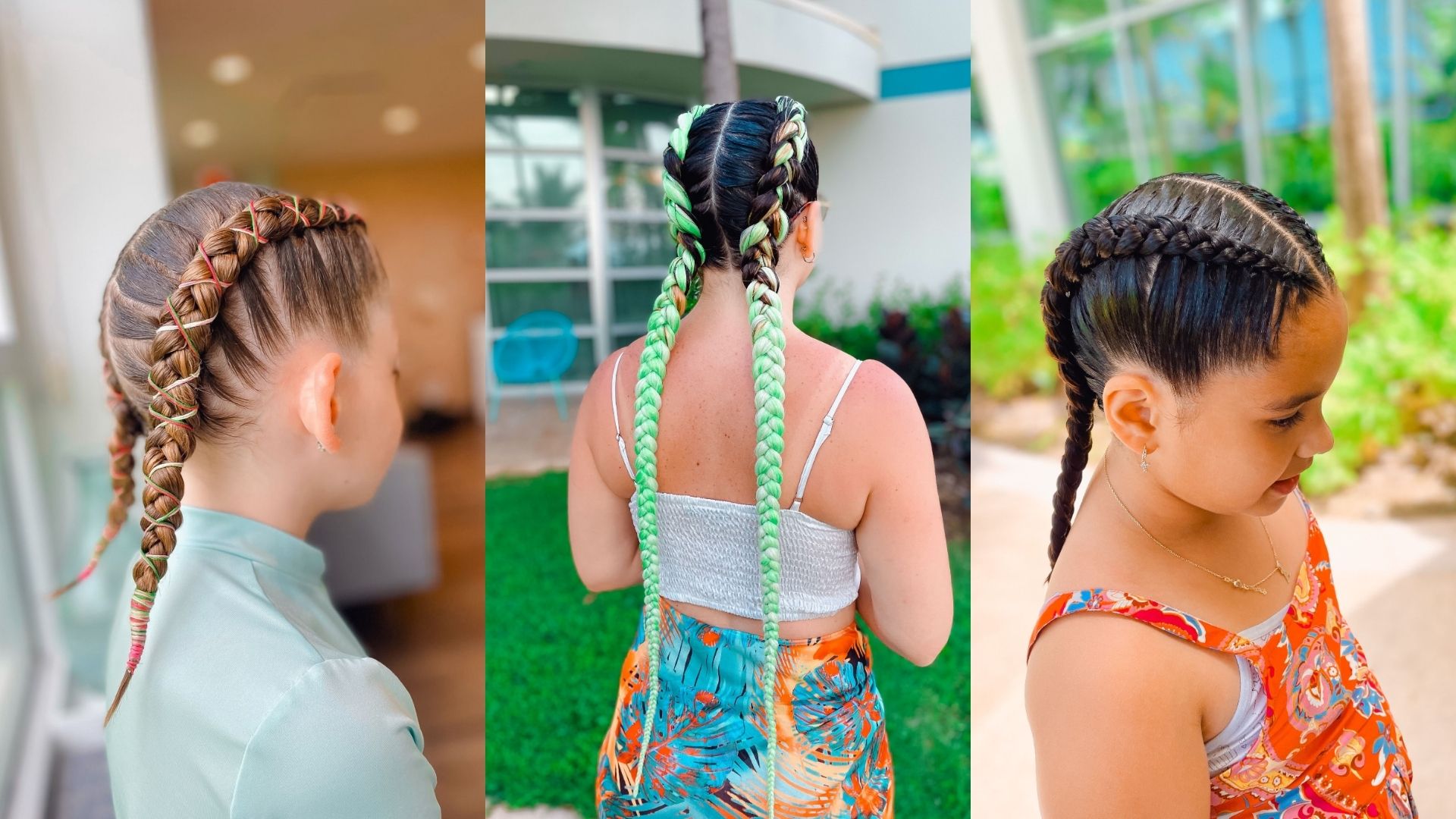
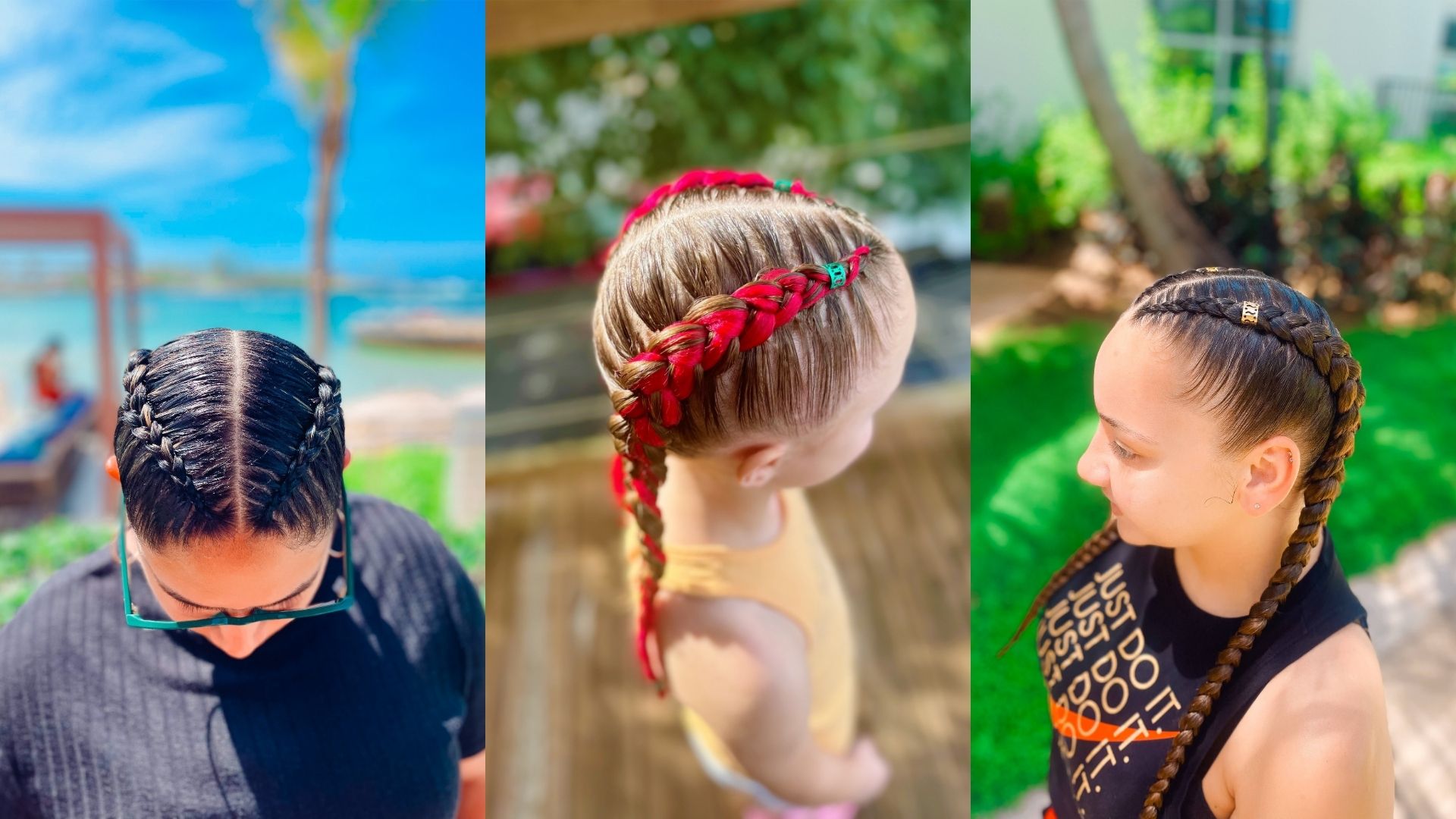
So, while two braids look simple and take less time, this hairstyle can be harder to create than cornrows or box braids. At least, if you want to achieve professional quality. Here’s why: With just two braids, you need the perfect braiding technique. If you are yet to master your braiding skills, every one of your flaws gets exposed with this hairstyle.
#1: Parts
Remember: Nice, clean parts are the foundation of any braided hairstyle! While you can pull off a few mistakes with a set of small box braids, there’s no way to hide a flaw when you create the two braids. It’s not easy to achieve the perfect middle part, and for this hairstyle, the hair division should be perfectly balanced, straight, and right in the middle of your client’s hairline.
#2: Consistency
For any set of braids, we want consistency when it comes to grip: You want all your braids to be even in thickness and firmness. With two braids, even a slight difference between them will ruin the final result.
#3: Extensions
Feed and hide are two key braid actions that may make or break any braided hairstyle. Again, if you make a small mistake when adding hair with a few braids out of a dozen (if you’re creating large box braids, for instance), it isn’t as bad as making the same mistake with one braid that’s half of the whole hairstyle!
#4: Braiding Speed
I always tell my students that braiding is the easiest part of being a professional braider. The hardest part is managing a tight schedule, dealing with a client who shows up late or comes with a whole different hairstyle they want you to undo before creating yours, and never having time to rest your hands because you’re braiding back-to-back clients for several hours every day.
The timing depends partially on your client’s hair length, but still, medium box braids take about 4 hours, and six cornrows with extensions take about 2:30 hours. Since creating two braids is supposed to be way faster than other styles (about an hour), any minor delay may cause you to overlap braiding appointments. Two braids are supposed to be fast!
Learning how to create two braids is great because they’re such a popular style! Once you get the technique right, it’s fast, it’s versatile, and you can easily redo it.
Tips If You’re Struggling During Your Braiding Lessons
When teaching how to braid this hairstyle, I recommend that my students try to braid using different angles. For example, start creating the two braids right on the hairline, and then bring them back to the middle, etc. This way, you can see for yourself what it takes to move the braid and place it exactly where you want it.
Another tip for the two braids, as well as for any other hairstyle that requires perfect symmetry, is using the mirror a lot. Don’t rely on your muscle memory or intuition: Make sure you imitate exactly how the first braid looks.
Finally, use the two braids as the laboratory to see exactly which braiding action you need to work on. And then, apply what you learned to each hairstyle.
Why You Should Learn How to Braid With the Right Technique
If you’re already braiding and your hairstyles come out good enough, you may wonder whether investing in a braid tutorial or a braiding course is actually worth it. If this is the case, let me ask you these questions:
Do you feel you’re braiding fast enough?
Are you confident when braiding natural hair, but struggle when you have to add extensions?
Do your hands, fingers, or any other part of your body feel painful after braiding for a while?
If you answered ‘yes’ to any of those questions, then you should definitely improve your braiding technique.
You see, the right braiding technique should be fast, especially if you are a professional braider. Sure, one thing is braiding your best friend while you’re sunbathing at the beach, but you don’t want to take too long when you’re braiding for a living. You need to commit to each client and braid them within an estimated time. The same applies if you need to braid your child at home and you’re in a hurry to get them ready for school!
Second, I can’t tell you how many times I’ve heard amateur braiders telling me, “Oh, I can braid, as long as I don’t need to add extensions”, as if feed-ins were a completely different kind of braid. When you learn the proper braiding technique, you find it easy to upgrade from natural hair to extensions. This allows you to expand your offer, as you don’t depend on your client’s actual hair length. You can create all sorts of braided hairstyles and play with length and colors.
Finally, braiding shouldn’t feel like torture, not for your client (of course) but neither for you! Your hands, shoulders, neck, or back shouldn’t hurt. When you apply the right braiding method, it feels good for your body. You need to be able to braid for 8 hours straight, many days a week. You can’t pull this off if your fingers feel numb, if your neck or back is stiff, and you need to take a painkiller after braiding.
Two Common Braiding Mistakes Beginners Make
Now that we’ve seen three good reasons why learning how to braid with the right method, let’s explore your current technique and what’s slowing you down. Many times, when I first share the braiding technique with my students, I notice they tend to make two mistakes. Let me share them with you, so you can avoid them from now on.
Braiding Away From the Root
When beginner braiders are learning how to braid, many times they split the hair into three equal sections (which is fine) but hold each hair strand away from the client’s head. When they start braiding, their fingers aren’t touching the scalp. You can actually notice a space between the scalp and your fingers!
What’s wrong with this? When you create the two braids and you place your fingers away from the scalp, the braids may look nice at plain sight, but they feel loose. Since they’re not properly tight, the hairstyle won’t last as it should. Even worse, your client’s hair won’t have the adequate protection these braids are supposed to provide!
How to fix it? Make sure your middle fingers are always placed directly on your client’s scalp when you start braiding each strand to create the braid close to the head.
Grabbing Hair With the Wrong Finger
It takes a little practice to create the muscular memory you need to braid professionally. In our braiding course, I insist that you practice the hair-grabbing technique in the air, so you can notice the movement with your fingers and get it right before attempting your first braid. I’ve noticed many beginner braiders confusing their fingers and grabbing the hair strand with the middle finger instead of their index.
What’s wrong with this? The problem is that when you mix up your fingers, you’ll get confused and you won’t know which action to do to go on with the braid. Your fingers are going to get tangled, and soon, you’ll be facing up and wondering what to do next.
How to fix it? Practice the right finger position, which is holding the strands with a claw you create with your thumb and middle finger, and using the index finger to grab.
In Sunny Braids, we want you to learn how to braid with confidence, acquire clarity, and develop your unlimited potential as a braider. Wanna keep learning and improve your braiding technique once and for all? What if you could get results in just two hours?
You can, with our Five Braid ActionsTM system!
Are you ready to upgrade your braiding skills and start braiding like a pro? Sign up for our braiding course.